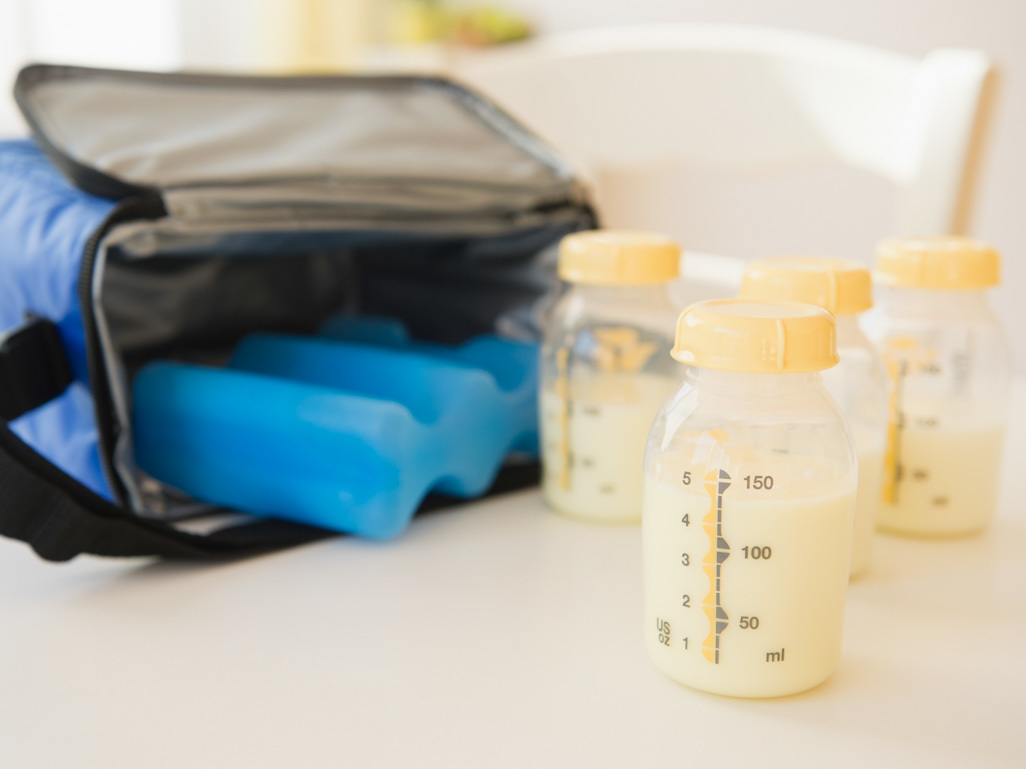
I stood in the TSA line at Portland International Airport holding a cooler bag full of pre-mixed formula bottles and praying to every deity I could think of that they would not make me dump them. It was December. Lily was six months old. We were flying to Chicago to visit Mark's parents for Christmas, and I had spent the previous three days obsessing over how to transport enough formula for a 4-hour flight plus airport time plus delays plus the inevitable "Lily is hungry NOW" moment that would happen at the exact worst possible time.
The cooler bag was a tactical masterpiece. Six pre-mixed bottles, each labeled with Lily's name, the date, the time, and the volume. Two ice packs, frozen solid, wrapped in paper towels to prevent condensation. A backup container of formula powder, sealed in a ziplock bag, with the original can label tucked inside for identification. Three empty bottles with pre-measured water. A portable bottle warmer. A burp cloth. A bib. A change of clothes for Lily. A change of clothes for me, because I had learned from experience that formula + turbulence + baby = wardrobe disaster. The bag weighed approximately 47 pounds and represented roughly $89 worth of formula, equipment, and anxiety.
Mark was carrying the diaper bag, which had diapers, wipes, a changing pad, and his own change of clothes, because he had also learned from experience. He looked at my cooler bag and said, "You know they make formula at the destination, right?" I looked at him with the expression that all mothers develop around month three, the one that says "I love you but you are an idiot and if you say one more word I will end you." He stopped talking. Smart man.
The TSA agent was a woman in her fifties with the weary expression of someone who had already dealt with three screaming toddlers, two confused grandparents, and one guy who tried to bring a full-size shampoo bottle through security. She looked at my cooler bag. She looked at me. She looked at Lily, who was sleeping in her carrier with the angelic expression that babies adopt specifically to make their parents look like liars when they claim the baby is "usually fussy."
"Formula?" she asked.
"Yes," I said, in a voice that was probably too loud and too defensive. "For my daughter. She is six months old. It is pre-mixed. I have the powder backup too. And the labels. And the ice packs. And—"
"It is fine," she said. "Formula is exempt from the 3-ounce rule. Just put it in a separate bin for screening."
That was it. No interrogation. No dumping. No "you can only bring 3 ounces." No "it needs to be in original containers." No "your baby needs to drink it in front of me." Just... fine. Put it in a bin. Move along. I had spent three days researching TSA regulations, printing policy pages, preparing a speech about medical necessities and infant nutrition, and she did not even ask to see the labels.
But here is the thing: I had done the research, and the research was worth doing. Because while MY TSA agent was knowledgeable and efficient, not all TSA agents are. I have heard stories. I have read the Facebook posts. I have seen the viral videos of parents being forced to dump formula or drink breast milk or throw away ice packs because an agent did not know the regulations. And while those incidents are rare, they are not rare enough to ignore. When you are standing in a security line with a baby and a cooler bag and a flight to catch, you do not want to be the exception. You want to be prepared.
So here is what I know, from research and experience and a little bit of paranoia, about flying with formula. TSA allows formula, breast milk, and juice in quantities exceeding 3.4 ounces. This is explicitly stated on the TSA website. You do not need to fit them in a quart-sized bag. You do not need to put them in original containers. You do not need to have your baby drink them in front of the agent. You DO need to declare them at the security checkpoint. You DO need to put them in a separate bin for X-ray screening. You MAY be asked to open a container for additional screening. The agent MAY test the liquid. The ice packs MAY be inspected. But they cannot confiscate formula for a baby. They cannot force you to dump it. They cannot refuse to let you bring it through.
Knowing this is power. Knowing this is the difference between a smooth security experience and a stressful confrontation. I printed the TSA policy page and kept it in my cooler bag, just in case. I never needed it. But I had it. And that knowledge made me calm enough to handle the security line without panicking, which meant Lily stayed asleep, which meant the entire airport experience was approximately 400% less terrible than it could have been.
The flight itself was... manageable. Lily woke up during boarding, because of course she did, and demanded a bottle immediately. I had pre-mixed bottles that were cold from the ice packs, and I had the portable bottle warmer, which plugs into the USB port on the seatback entertainment system. Yes, I had checked that the plane had USB ports. Yes, I had checked that the warmer worked with USB power. Yes, I am that person. The bottle warmed in about 8 minutes, during which Lily made noises that I can only describe as "pterodactyl preparing to hunt," and then she drank it and fell asleep for the entire flight. All four hours. Mark and I watched a movie. We ate pretzels. We had a conversation that was not about diapers or formula or sleep schedules. It was basically a vacation.
Of course, the return flight was different. The return flight had a three-hour delay. The return flight had Lily waking up every 45 minutes. The return flight had me mixing a bottle in an airport bathroom with one hand while holding Lily with the other and using my knee to keep the bottle from rolling off the changing table. The return flight had me running out of pre-mixed bottles and having to use the powder backup and the water bottles and the mixing instructions I had taped to the inside of the cooler bag. The return flight had me crying in a corner of Gate C17 while Mark bought overpriced airport coffee and tried to figure out if our flight was actually going to depart or if we were going to spend the night in O'Hare.
But we survived. We made it back to Portland. The formula lasted. The baby was fed. The marriage was intact. And I learned some things that I now tell every parent who asks about flying with formula.
First: pre-mix more than you think you need. I brought six bottles for a 4-hour flight. I needed eight. Delays happen. Babies eat more when they are stressed. Airport time is longer than you think. The formula you pre-mix is the formula you do not have to mix in a bathroom while holding a baby with one hand.
Second: bring powder backup. Even if you think you will not need it. Even if you have carefully calculated every ounce. Even if your flight is direct and short and scheduled perfectly. Bring powder. Bring water bottles. Bring the scoop. Bring the instructions. Because the one time you do not bring backup is the one time you will need it, and airport convenience store formula costs approximately the same as a small car.
Third: ice packs are your friend, but they are also TSA's friend. They will be screened. They may be swabbed. They may be questioned. Use reusable gel packs instead of loose ice, because loose ice melts and leaks and creates a mess that you do not need. Wrap them in paper towels or a thin cloth to prevent condensation. And bring extras, because TSA agents have been known to confiscate ice packs for "additional screening" that never returns them.
Fourth: the portable bottle warmer is worth its weight in gold. Or formula. Or sanity. Whatever you value most. Being able to warm a bottle on the plane, in the airport, in a rental car, or in a hotel room without hunting for a microwave or a coffee maker is a game-changer. Get one that plugs into USB, car outlets, and wall outlets. Get one with temperature control. Get one that is small enough to fit in the cooler bag but powerful enough to warm a 6-ounce bottle in under 10 minutes.
Fifth: know your rights. Print the TSA policy. Keep it in the cooler bag. Be polite but firm. If an agent questions your formula, explain that it is medically necessary for an infant and that TSA policy explicitly allows it. If they persist, ask for a supervisor. This has never happened to me, but I have read enough stories to know that it happens, and being prepared is better than being caught off guard.
And sixth: accept that flying with a baby is going to be hard, regardless of how well you prepare. The formula logistics are just one piece of the puzzle. There is also the diaper situation. The nap schedule disruption. The ear pressure during takeoff and landing. The confined space. the strangers who judge you for your baby's crying. The exhaustion of traveling with a tiny human who needs constant attention. The formula is the part you can control. Control that part. Let the rest be chaos. That is the best you can do.
We flew again last month, to San Francisco for a conference. Lily is two now. She drinks whole milk from a sippy cup. She walks through the airport holding my hand. She says "plane!" when she sees them through the windows. The cooler bag is retired, replaced by a small backpack with snacks and a water bottle and a change of clothes. The formula days are over. But I still remember the anxiety of that first flight, the cooler bag, the TSA line, the prayer to every deity. And I remember the relief when the agent said "it is fine," and I remember the peace of knowing I was prepared, and I remember the joy of watching Lily sleep through a flight while I ate pretzels and watched a movie with my husband.
That is the thing about flying with formula: it is hard, but it is doable. It is stressful, but it is survivable. It is expensive, but it is worth it. And when you are standing in the TSA line with a cooler bag and a baby and a heart full of anxiety, remember: you are prepared. You know the rules. You have the formula. You have the backup. You have the ice packs. You have the warmer. You have the policy printout. You have everything you need. And the agent will probably just say "it is fine" and wave you through. And then you will be on the other side, with a fed baby and a surviving marriage and a destination ahead, and you will have done it. You will have flown with formula. And you will never have to do it for the first time again.
— Emily Hartwell, from Portland with a retired cooler bag and a toddler who says "plane!"
