The Formula Feeding Kit I Keep in My Car at All Times
Emily Hartwell
I was standing in the parking lot of the Fred Meyer on Hawthorne, holding a screaming Lily, staring at an empty formula can, and wondering how I had become the kind of mother who runs out of formula in a grocery store parking lot. It was a Tuesday. I had sworn I had a backup can in the diaper bag. I was wrong. Mark was at work. My mother was in Eugene. And Lily was hungry in that specific way that only 8-month-olds can be hungry. Loud. Immediate. Non-negotiable. The kind of hungry that makes strangers stare and mothers cry.
I bought a can of formula I did not need, just to get through the next two hours, and I drove home crying. Not because I was out of formula. Because I had been out of formula before and I had not learned. That night, at 2:47 AM, I built the car kit. Not a diaper bag. A separate, dedicated, never-leave-the-car formula feeding kit. It has saved me at least six times since then. Maybe more. I have lost count.
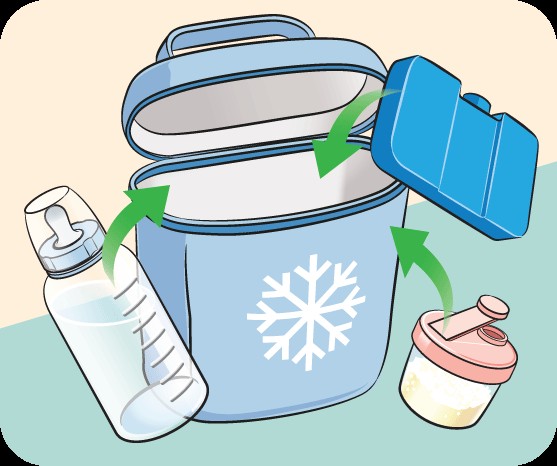
Here is what is in it. One unopened can of powder formula. Not the brand we use at home. A different brand. Because if Lily ever develops a reaction to our primary formula, I need an alternative that I know she tolerates. One bottle with a slow-flow nipple. A portable bottle warmer that plugs into the car's 12V outlet. A small container of pre-measured scoops. And a thermos of boiled water that I refresh every morning. The whole kit lives in a insulated bag under the passenger seat. It does not come inside. It does not get used for daily feeds. It is emergency-only. Sacred. Untouchable.
The Formula Calculator helped me figure out exactly how much powder to pre-measure. At 8 months, Lily needed 7 ounces per feed, which is 3.5 scoops. I pre-measure 10 scoops into a small container. That gives me two full feeds plus a little buffer. I do not do math in a parking lot anymore. I just pour and shake. The calculator also helped me adjust when she hit 9 months and her needs changed. I updated the kit accordingly.
The Mixing Guide is the other half of the equation. I used to eyeball the water temperature. I used to guess if it was too hot or too cold. The guide gives exact temperatures and ratios. I printed the quick-reference card and laminated it. It lives in the kit. Because at 2:47 AM in a parking lot, I do not trust my brain. I trust the laminated card. The card has never failed me. My brain has failed me many times.
I also keep a Feeding Log in the kit. Not the full log. Just a small notebook where I write the date and time of any emergency feed. Because if Lily ever has a reaction to the emergency formula, I need to know exactly when she had it and how much. The pediatrician will ask. And I will not remember. I never remember. That is why I write it down. That is why the log exists. It is my insurance policy against my own memory.
The kit cost me about $45 to assemble. The formula is the most expensive part, and I rotate it every six weeks so it does not expire. The bottle warmer was $12 on Amazon. The insulated bag was free from a conference. The peace of mind is worth more than all of it combined. It is worth more than the car. It is worth more than sleep. Because when your baby is screaming and you are empty-handed, nothing else matters.
If you are a formula-feeding parent, build the kit. Do not wait for the parking lot moment. It will happen. It always happens. The question is whether you are ready when it does. I was not ready. Now I am. And Lily sleeps better because of it. So do I.
— Emily Hartwell, Portland
Mark, my husband, thought the car kit was overkill. He said, we have formula at home. I said, we are not always at home. He said, we can stop at a store. I said, not at 2 AM we cannot. He said, when would we ever need formula at 2 AM? I stared at him. He remembered the parking lot incident. He stopped arguing. He now checks the kit every Sunday without being asked. Marriage is compromise. And sometimes compromise means admitting your wife was right about the emergency formula.
The Fred Meyer on Hawthorne is where it happened. It is also where I buy most of our groceries. I cannot walk past aisle 7 without remembering the screaming. I cannot look at the formula shelf without feeling a phantom panic. That is trauma, I guess. Small trauma. Parent trauma. The kind that does not make it into parenting books but should. The books talk about diapers and sleep schedules. They do not talk about the parking lot. They should.
Lily is 2 now. She drinks whole milk. The kit is still in the car. I cannot bring myself to remove it. It feels like removing a seatbelt. It feels like tempting fate. So it stays. Under the passenger seat. Waiting. Just in case. Because just in case is the whole point of being a parent. You prepare for the moments you hope never happen. And when they do not happen, you do not regret the preparation. You are just grateful.
What should be in an emergency formula feeding kit?
An unopened can of powder formula, a bottle with slow-flow nipple, a portable bottle warmer, pre-measured scoops, and a thermos of boiled water. Keep it in an insulated bag under the passenger seat and refresh daily.
How much does a car formula kit cost?
About $45 to assemble. The formula is the most expensive part and should be rotated every six weeks to prevent expiration.
Why keep a separate formula kit in the car?
Because running out of formula in a parking lot with a screaming baby is a situation you never want to repeat. The kit is emergency-only and gives peace of mind.
