I used Portland tap water to mix Lily's formula for the first four months of her life. Every bottle. Every feed. Every 2 AM mixing session. I never thought twice about it. Portland has great water, right? Everyone says so. The Bull Run watershed. The mountain springs. The pristine Pacific Northwest water that people pay premium prices for in bottled form. I was practically doing her a FAVOR by using tap water. It was natural. It was local. It was basically artisanal.
Then I read the annual water quality report.
It was a Tuesday afternoon. I was sitting at the kitchen table with a cup of coffee that had gone cold, scrolling through my email, and I saw the subject line: "City of Portland Annual Water Quality Report." I almost deleted it. I get dozens of emails from the city every month—parking updates, recycling schedules, neighborhood meeting notices—and I delete most of them unread. But something made me open this one. Maybe it was the word "quality." Maybe it was the fact that I had just mixed a bottle and was staring at the tap while Lily drank. Maybe it was just procrastination from the charting I was supposed to be doing for work.
I read the whole thing. All 47 pages. I read about chlorine levels and pH balance and total dissolved solids. I read about the treatment process and the testing schedule and the compliance history. And then I got to the section about lead. And I stopped. Because Portland, it turns out, has a lead issue. Not a crisis-level issue, not a Flint-level issue, but an issue. Older homes—homes built before 1985—have lead service lines. And even if the water leaving the treatment plant is clean, it can pick up lead as it travels through those old pipes. And lead, even in small amounts, is not something you want in a baby's formula.
I looked up our house. Built in 1978. Pre-1985. I called the city's lead line information hotline, which I did not even know existed until that moment. I sat on hold for 23 minutes, listening to elevator music that sounded like it was recorded in 1987, and when someone finally answered, I asked the question that was making my chest tight: "Does our house have a lead service line?"
The answer was: "We do not know. The records for that address are incomplete. We can send someone to test it. It will take 4-6 weeks."
Four to six weeks. During which I would continue mixing formula with water that might contain lead. For my preemie daughter who was already at higher risk for developmental issues. While her brain was building itself at a rate that would never happen again in her entire life. I hung up the phone and walked to the sink and stared at the faucet like it had personally betrayed me.
I did what any rational, sleep-deprived parent would do. I panicked. I Googled "lead in baby formula water" and fell down a rabbit hole of CDC guidelines, EPA standards, pediatrician recommendations, and mommy blog opinions that ranged from "tap water is fine everywhere" to "only use distilled water blessed by a shaman." I called my pediatrician's office and got a nurse who said, very patiently, "If you are concerned, use filtered water. Boiling does not remove lead. A carbon filter with lead reduction certification does."
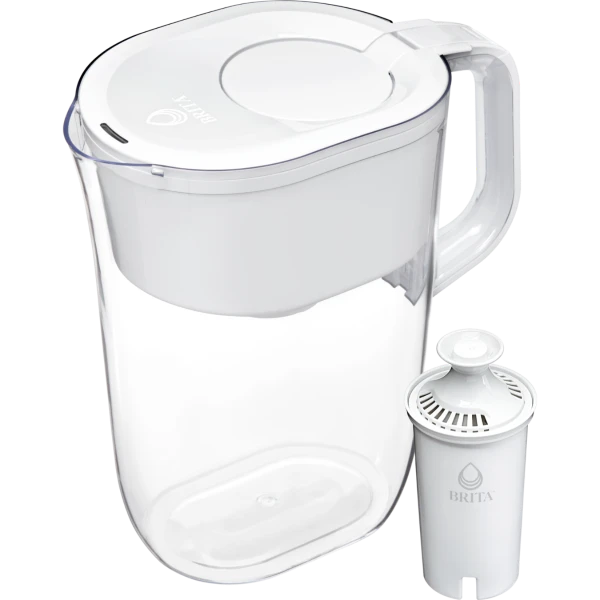
That night, I went to Target on Powell Boulevard and bought a water filter pitcher with lead reduction certification. It cost $34.99. The replacement filters cost $6.99 each and last two months. I also bought a pack of bottled water as a backup, because I was in full crisis mode and I needed immediate solutions, not long-term plans. I came home, installed the filter, filled the pitcher, and mixed Lily's next bottle with filtered water. She drank it without noticing any difference. Of course she did not. She is a baby. She does not have opinions about water sources. But I noticed. I noticed that I felt lighter. That my chest was not tight. That I could mix a bottle without wondering if I was poisoning my child.
Over the next few weeks, I became a water quality obsessive. I read every report I could find. I learned about the difference between chlorine (used to disinfect, safe in regulated amounts) and chloramine (a chlorine alternative that some cities use). I learned about total dissolved solids and why they matter for taste but not necessarily for safety. I learned that Portland's water is actually quite good by national standards—low in contaminants, well-treated, regularly tested—but that the distribution system, the pipes between the treatment plant and my tap, was the weak link. And that weak link was invisible. I could not see it. I could not test it myself. I just had to trust that the filter was working.
I also learned something that made me angry. The city had known about the lead service lines for years. They had been replacing them, but at a rate of about 500 per year, and there were thousands left. The federal government had changed the lead rule in 2021, making replacement more urgent, but funding was limited and progress was slow. Meanwhile, families like mine were mixing formula with water that might contain a neurotoxin, and most of us did not even know to ask the question. The water quality report was mailed out annually, but who reads 47 pages of municipal data? I certainly had not, until I did.
I started talking about it. At the pediatric nutrition center where I work, I began asking parents about their water source. Most said "tap water" without hesitation. A few said they used bottled water because they had heard tap water was bad, but they could not explain why. Almost none had read their local water quality report. Almost none knew if their home had lead pipes. Almost none had considered that the water they used for formula might be different from the water they drank themselves.
One mom, a patient of mine whose baby was failing to gain weight on formula, mentioned in passing that she used well water. I asked if she had had it tested. She said no, she had assumed it was fine because it tasted good. I sent her home with a list of local water testing labs and a recommendation to test for bacteria, nitrates, and heavy metals. She came back two weeks later with a report showing elevated nitrates—probably from agricultural runoff—and switched to bottled water for formula. Her baby's weight gain improved within a month. Was it the water? Maybe. Maybe not. But it was a variable we had eliminated, and that mattered.
Here is what I tell parents now, and what I wish someone had told me: water matters. Not just the temperature. Not just whether it is boiled or not. The SOURCE matters. The quality matters. The pipes between the treatment plant and your kitchen sink matter. And you have a right to know what is in your water, and you have a right to make informed choices about what you feed your baby.
The practical steps are simple, but they require intention. Step one: read your annual water quality report. It is usually mailed, but you can also find it online. Look for the sections on lead, bacteria, and chemical contaminants. If anything is above the recommended levels, take action. Step two: if you live in an older home, find out if you have lead service lines. Call your water utility. Ask for a test. Do not wait for the annual report to tell you there is a problem. Step three: if you are concerned, use a filter certified to remove the contaminants you are worried about. Not all filters are created equal. A basic carbon filter removes chlorine and improves taste, but it will not remove lead. You need a filter specifically certified for lead reduction. Step four: if you use well water, test it annually. Test for bacteria, nitrates, heavy metals, and pH. Well water is not regulated the same way municipal water is, and the responsibility for safety is entirely on you.
I still use filtered water for Lily's milk, even though she is two now and drinking whole milk instead of formula. The filter lives on the counter. The pitcher is always full. It is just part of our routine, like brushing teeth or checking the locks before bed. Mark thinks I am a little obsessive, and he is probably right. But I watched my daughter drink formula mixed with water that might have contained lead for four months, and I did not know, and I cannot unknow that. So I filter. I test. I read the reports. And I tell other parents to do the same.
The water quality report that started all of this sits in a folder in my office now. I pull it out when parents ask about water safety. I highlight the lead section. I show them how to read the numbers. I tell them about the service lines and the filters and the testing labs. And I always end with the same thing: your baby is building their brain with every bottle. Make sure the water you are building it with is as clean as you can make it. It is not paranoia. It is parenting.
— Emily Hartwell, from Portland with a filtered water pitcher and a lot of opinions about municipal infrastructure
