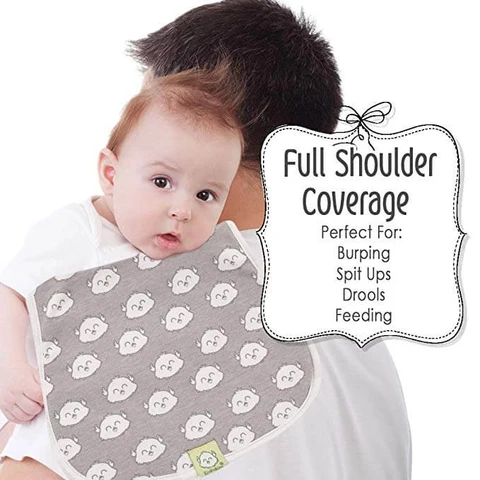
The first time Lily projectile vomited, I thought she was dying. I am not exaggerating. I thought my three-week-old daughter was experiencing a medical emergency that would end with an ambulance and a NICU readmission and me sobbing in a hospital hallway. The vomit traveled three feet. It hit the wall. It hit the floor. It hit my shirt. It was forceful and violent and completely unlike the gentle dribble of spit-up I had been wiping off her chin for the previous two weeks.
I called 911. I am not proud of this. I am a registered dietitian. I have worked in a NICU. I have seen actual medical emergencies. But in that moment, with vomit on the wall and my baby looking stunned and me covered in partially digested formula, I lost every ounce of clinical judgment I had ever possessed. The dispatcher was kind. She asked questions. She determined that Lily was breathing, alert, and not turning blue, and she gently suggested that I call my pediatrician instead of requesting an ambulance. I hung up, called Dr. Chen's after-hours line, and cried while explaining what had happened.
Dr. Chen called back within ten minutes. She asked if the vomit was projectile. Yes. She asked if it was after a feed. Yes. She asked how much Lily had eaten. Four ounces. She asked if Lily seemed distressed afterward. No, actually. She had looked surprised, then calm, then hungry. She asked if there was any blood or green color. No. She asked about wet diapers. Normal. She asked about weight gain. On track. And then she said the words that changed my entire approach to baby bodily fluids: "That sounds like normal infant reflux, Emily. Projectile vomiting can be alarming, but it is not always dangerous."
I did not believe her. I could not believe her. How could something that VIOLENT be normal? How could a tiny human expel food with that much force and be fine? How could I, a medical professional, not know this? I spent the next three hours Googling "projectile vomiting in infants" and reading about pyloric stenosis and intestinal obstructions and emergency surgeries, and by the time Mark came home from work, I was convinced that Lily needed an ultrasound and possibly immediate intervention.
Mark, who is not a medical professional but is very good at being calm, suggested we go to the appointment Dr. Chen had scheduled for the next morning. He suggested we not go to the emergency room. He suggested that perhaps, just perhaps, Dr. Chen knew what she was talking about. I agreed, reluctantly, while secretly planning to demand an ultrasound regardless of what Dr. Chen said.
The appointment was enlightening. Dr. Chen explained the physiology of infant reflux in a way that made me feel like a first-year nutrition student instead of a seasoned clinician. She explained that the lower esophageal sphincter—the valve between the stomach and esophagus—is immature in infants. It does not close properly. It lets stomach contents flow back up. Sometimes that flow is gentle and dribbles out as spit-up. Sometimes the stomach contracts at the same time, and the combination of relaxed sphincter plus stomach contraction creates force. That force can propel milk several feet. It looks dramatic. It sounds dramatic. But if the baby is otherwise healthy, gaining weight, and not distressed, it is physiologically normal.
She drew me a diagram. On the exam table paper. With a pen. A cross-section of an infant stomach and esophagus, with arrows showing reflux flow and a note about the immature sphincter. I took a photo of it. I still have that photo. It is the most useful medical illustration I have ever seen, and it was drawn in 30 seconds on disposable paper by a pediatrician who was probably running late for her next appointment.
Dr. Chen also explained the difference between spit-up and vomiting in terms that I could actually use. Spit-up: small amounts, gentle flow, often with a burp, baby seems comfortable afterward. Vomiting: larger amounts, forceful expulsion, baby may cry or seem distressed, may be accompanied by other symptoms. The key differentiator is not the force—it is the context. Is the baby gaining weight? Is the baby happy? Is the baby feeding normally? Are there other symptoms? If the answer to the first three is yes, and the answer to the fourth is no, you are probably dealing with reflux, not a medical emergency.
She also gave me the red flags. The things that WOULD require immediate attention. Green vomit (bilious, indicating intestinal obstruction). Bloody vomit (indicating irritation or bleeding). Vomit accompanied by severe abdominal distension. Vomit with fever and lethargy. Vomit with refusal to feed for multiple feeds. Vomit with signs of dehydration. These are not "wait and see" situations. These are "call immediately" situations. Everything else? Document, monitor, and discuss at the next appointment.
I started tracking. Of course I did. I am a dietitian. I track everything. I created a spit-up log in the Feeding Log—yes, I modified the tool for my own purposes, which is the beauty of having built it myself—and I recorded every episode for two weeks. Time. Amount. Force (gentle/moderate/projectile). Color. Baby's behavior afterward. Associated symptoms. And at the end of two weeks, I had data. Beautiful, calming, reassuring data.
Lily had 14 spit-up episodes in 14 days. 12 were gentle dribbles. 2 were moderate flows. 0 were projectile after the first incident. All were white or slightly curdled. None had blood or green color. She was happy after 13 of them. She was slightly fussy after 1, but a pacifier solved it. She gained 1.2 pounds in those two weeks. She had 8 wet diapers per day. She fed normally. She slept normally. She was, by every objective measure, a perfectly healthy baby with perfectly normal reflux.
But the anxiety did not go away immediately. Even with the data, even with Dr. Chen's explanation, even with the diagram on the exam table paper, I still flinched every time Lily made a noise after a feed. I still kept a burp cloth within arm's reach at all times. I still changed her outfit three times a day because I was paranoid about spit-up stains. I still panicked, internally, when she made that particular gurgling sound that preceded a spit-up episode. The knowledge was in my head, but the fear was in my gut, and my gut does not always listen to my head.
It got better with time. With repetition. With experience. After the 50th gentle spit-up, I stopped flinching. After the 100th, I stopped reaching for the burp cloth preemptively. After the 200th, I started laughing when she spit up on Mark's clean shirt right before he left for work. The fear faded, replaced by familiarity, replaced by acceptance, replaced by the knowledge that this was just... normal. Annoying, messy, laundry-intensive, but normal.
I also learned the practical management strategies that actually work. Smaller, more frequent feeds instead of large bottles. Keeping Lily upright for 20-30 minutes after feeds. Avoiding vigorous activity immediately after eating. Using a slow-flow nipple to reduce air intake. Burping frequently during feeds. Elevating the head of her crib slightly (with pediatrician approval). None of these eliminated the spit-up entirely, but they reduced the frequency and volume enough that I stopped keeping a spare outfit in every room.
And I learned when to worry. The green vomit episode that never happened. The bloody spit-up that never appeared. The dehydration signs that never materialized. I learned the red flags so well that I could recite them in my sleep, which meant that when Lily did have a slightly concerning episode—a forceful spit-up with a small amount of mucus at 4 months—I could evaluate it calmly. No blood. No green. No fever. No lethargy. Normal diapers. Normal feeding. I watched her for an hour. She was fine. I did not call 911. I did not call the after-hours line. I documented it and mentioned it at her next appointment. Dr. Chen was not concerned. I was not concerned. The system worked.
Here is what I would tell any parent who is currently panicking about spit-up: it is probably normal. I know that does not help in the moment. I know that "probably normal" does not stop the heart racing when milk hits the wall. I know that "probably normal" does not reduce the laundry load. But it is probably normal. Most babies spit up. Many babies spit up daily. Some babies spit up forcefully. If your baby is gaining weight, feeding well, and not showing distress, the spit-up is a laundry problem, not a medical problem.
But also: trust your instincts. If something feels wrong, call. If the vomit is green, call. If there is blood, call. If your baby is lethargic or refusing feeds or showing signs of dehydration, call. The line between "normal reflux" and "medical concern" is not always obvious, and you are not expected to know the difference without help. That is what pediatricians are for. That is what the Feeding Log is for. That is what data is for. Document, monitor, and when in doubt, ask.
Lily does not spit up anymore. She outgrew it around 8 months, right on schedule, as her digestive system matured and her sphincter strengthened and her stomach learned to keep food where it belonged. I do not miss the spit-up. I do not miss the laundry. I do not miss the anxiety. But I do miss the innocence of thinking that every bodily fluid was a potential emergency. I am wiser now. I am calmer now. I am the mom who can evaluate a spit-up episode without calling 911, and that is a skill I never expected to need but am deeply grateful to have.
— Emily Hartwell, from Portland with a clean shirt and a much lower heart rate
