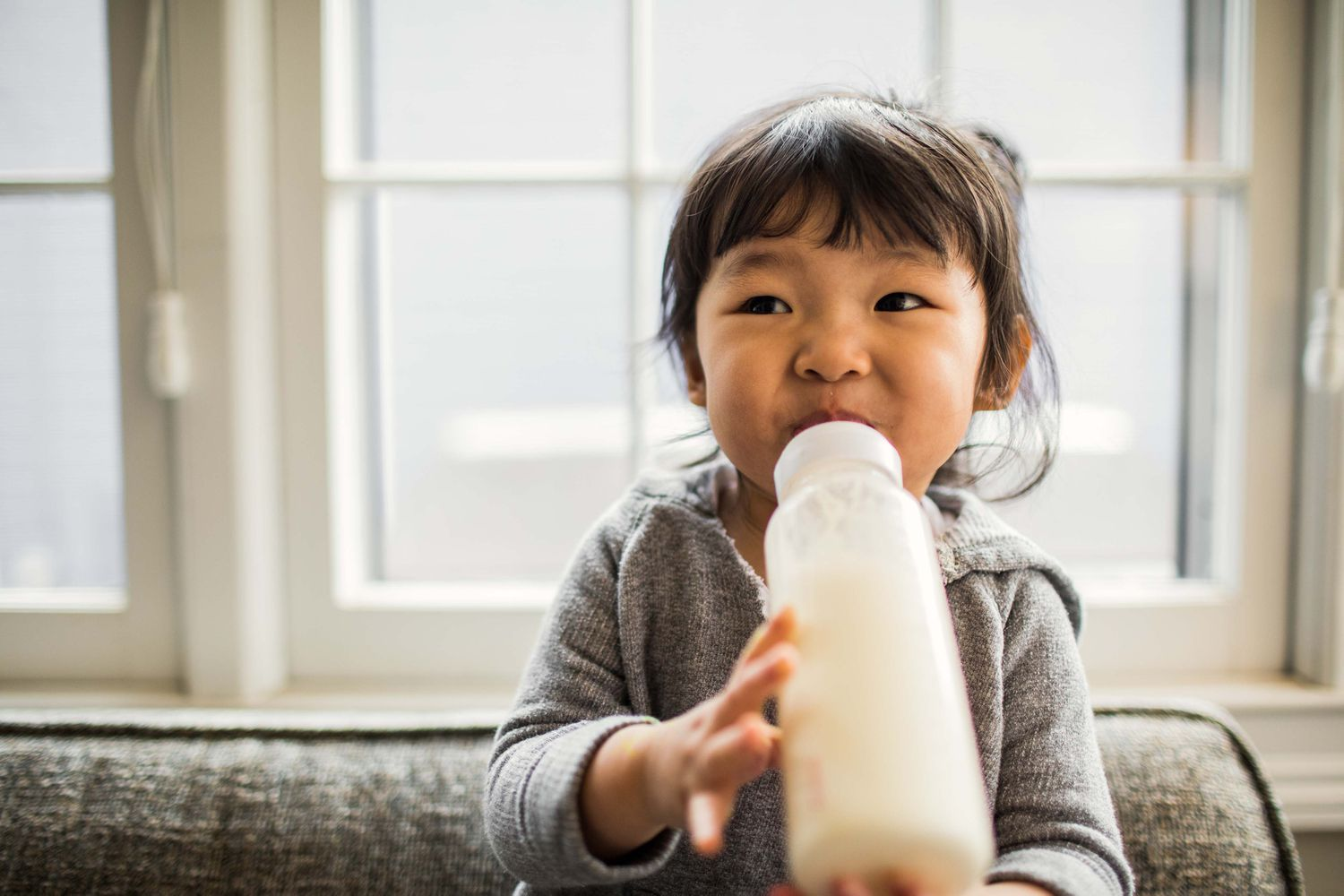
I cried over the last can of formula. I am not proud of this. I am a registered dietitian. I have a master's-level understanding of infant nutrition. I know that formula is a temporary food source, designed for the first 12-14 months of life, after which babies transition to whole milk and solid foods. I know this. I have told dozens of parents this. I have written articles about this. I have built tools to calculate this. And yet, when I opened the last can of hypoallergenic formula in our pantry, I sat on the kitchen floor and cried like someone had died.
Lily was thirteen months old. She had been eating solids for seven months. She was drinking whole milk from a sippy cup at daycare. She was walking. She was saying "mama" and "dada" and "no" with alarming frequency. She was, by every objective measure, a thriving toddler who no longer needed infant formula. And I knew this. I had planned for this. I had looked forward to this. The end of formula meant the end of $380 monthly expenses. The end of midnight mixing. The end of bottle washing. The end of scoop measuring and temperature checking and label reading and anxiety about whether she was getting enough.
But the end of formula also meant the end of something else. Something I had not anticipated grieving. The end of the bottle. The end of the 6 PM feed, when she would curl into my lap and drink slowly and look up at me with eyes that said "you are my entire world." The end of the 2 AM feed, when the house was quiet and it was just us, just her and me and a bottle and a rocking chair and the soft glow of the nightlight. The end of the formula itself, the specific brand we had finally settled on after months of trial and error, the one that did not make her vomit, the one that helped her grow, the one that I had researched and selected and mixed and measured with the precision of a scientist and the love of a mother.
I opened the last can on a Tuesday. I remember because Tuesdays are clinic days, and I had come home exhausted from seeing 12 families and Mark had made dinner and Lily was in her high chair throwing peas on the floor, and I went to the pantry to get a bottle ready for bedtime and I saw the can and I knew. I knew it was the last one. I knew we were not buying more. I knew that tonight, or tomorrow, or the day after, I would scoop the last scoop and mix the last bottle and feed her the last formula feed of her entire life.
I sat on the floor. The pantry floor. Surrounded by cereal boxes and pasta bags and the rice cooker we never use. I held the can. I read the label. I knew every word on that label. I knew the calorie content per scoop. I knew the protein source. I knew the vitamin D content. I knew the mixing instructions by heart. I knew the expiration date. I knew the lot number. I knew this can better than I knew some of my relatives. And I cried.
Mark found me there, sitting on the pantry floor, holding a formula can and crying. He did not ask why. He did not say "it is just formula." He did not say "you are being ridiculous." He sat down next to me. He put his arm around me. He said, "It is hard to say goodbye to something that kept her alive." And I cried harder, because he understood. Because he got it. Because this was not about the formula. It was about the journey. It was about the NICU discharge and the first bottle at home and the 3 AM mixing sessions and the growth spurts and the allergy scares and the WIC approval and the cost calculations and the label maker and the prep station and the system we had built together, bottle by bottle, ounce by ounce, day by day, to keep this tiny human alive and growing and thriving.
The formula was the mechanism. But it was also the symbol. It represented every sacrifice, every worry, every calculation, every late night, every early morning, every decision, every adjustment, every ounce of love that we had poured into her first year of life. And ending the formula felt like ending that chapter. Like closing a book I was not ready to finish. Like saying goodbye to a version of motherhood that was hard and exhausting and expensive but also intimate and purposeful and deeply, profoundly meaningful.
I fed her the last bottle that night. I mixed it carefully. I measured the water. I leveled the scoop. I shook it gently. I tested the temperature on my wrist. I sat in the rocking chair. I held her in my lap. She drank it slowly, looking up at me, her eyes half-closed, her hand resting on my chest. She did not know it was the last one. She did not know that tomorrow she would drink whole milk from a sippy cup like a big girl. She did not know that this was the end of an era. She just knew that she was warm and safe and loved and fed. And that was enough. That had always been enough.
I did not cry during the feed. I saved the crying for after, when she was asleep in her crib and I was standing in the kitchen washing the bottle and realizing that I would never wash this particular bottle again. That I would never mix this particular formula again. That I would never sit in that rocking chair at 6 PM with a baby in my lap and a bottle in my hand and the whole world narrowed down to this one moment, this one feed, this one connection.
The transition itself was gradual, which helped. We started at 12 months, replacing one formula feed per day with whole milk. Lily resisted at first. She made a face. She pushed the sippy cup away. She looked at me like I had betrayed her. "This is not my bottle," her expression said. "This is not my formula. What is this imposter liquid?" I mixed formula and milk together, gradually increasing the milk ratio over two weeks. She adapted. She always adapts. She is resilient in a way that I am not, in a way that makes me proud and sad at the same time.
By 13 months, she was drinking whole milk at daycare and formula only at home. By 13 and a half months, she was drinking milk at all feeds except the bedtime bottle. And then, on that Tuesday, the last bedtime bottle. The last formula. The last scoop. The last mix. The last feed. The last time she would drink infant formula, ever, in her entire life.
I kept the can. I know, I know. It is an empty can of hypoallergenic formula. It is trash. It is recycling. It is not a keepsake. But I kept it. I washed it out and dried it and put it on a shelf in my office, next to the water quality report and the WIC approval letter and the photo of Dr. Chen's diagram of infant reflux. It is a museum of motherhood. A collection of artifacts from the hardest, most beautiful year of my life. The can is the centerpiece. The can is the symbol. The can is the proof that we did it. That I did it. That I kept her alive, one scoop at a time, one bottle at a time, one day at a time.
Mark thinks I am slightly unhinged for keeping an empty formula can. He is probably right. But he also kept the first bottle she ever drank from, the one from the NICU with the hospital label still on it. He keeps it in his nightstand. He does not talk about it. I do not talk about my can. We just... keep them. Because some things are too important to throw away, even if they look like trash to everyone else.
Here is what I would tell any parent who is weaning their baby off formula: it is okay to grieve. It is okay to cry over the last can. It is okay to feel relieved and sad at the same time. It is okay to miss the bottle feeds even though you are exhausted by them. It is okay to feel like you are losing something even though you are gaining something—gaining a toddler, gaining independence, gaining a child who drinks from a cup and eats with a spoon and says "mama" and walks across the room and throws peas on the floor and becomes more themselves every single day.
The formula was a tool. It was a means to an end. It was nutrition, and nutrition is temporary, and the temporary nature of nutrition is the whole point. Babies grow. They change. They need different things at different stages. The formula served its purpose. It kept her alive. It helped her grow. It gave her the foundation she needed to become the toddler she is now. And now she does not need it anymore. And that is not a loss. That is a success. That is the goal. That is what we were working toward, all those months, all those bottles, all those 2 AM mixing sessions.
But also: it is okay to miss it. It is okay to miss the intimacy of the bottle feed. It is okay to miss the simplicity of knowing exactly what she was eating and exactly how much. It is okay to miss the ritual, the routine, the familiarity of scoop and mix and warm and feed and burp and rock and sleep. It is okay to miss the version of motherhood that required formula, because that version was hard but it was also beautiful, and it was yours, and it is ending, and endings are sad even when they are good.
Lily is two now. She drinks whole milk from a sippy cup with a straw. She drinks water from a regular cup, sometimes successfully, sometimes pouring it down her shirt. She eats cheese and yogurt and peanut butter and pasta and blueberries and the occasional pea that she does not throw on the floor. She is growing. She is thriving. She is healthy. She does not need formula. She does not need bottles. She does not need me to mix her food or measure her intake or worry about whether she is getting enough.
But I still have the can. And I still have the memories. And I still have the knowledge that I did it, that we did it, that we kept her alive and fed and loved through the hardest year of our lives. And when I look at that can, I do not see trash. I see a chapter. I see a journey. I see love, measured in scoops, mixed with water, warmed to the perfect temperature, and fed to a baby who looked up at me with eyes that said "you are my entire world."
And she still looks at me that way. Just without the bottle. And that is enough. That is more than enough. That is everything.
— Emily Hartwell, from Portland with an empty formula can and a full heart
