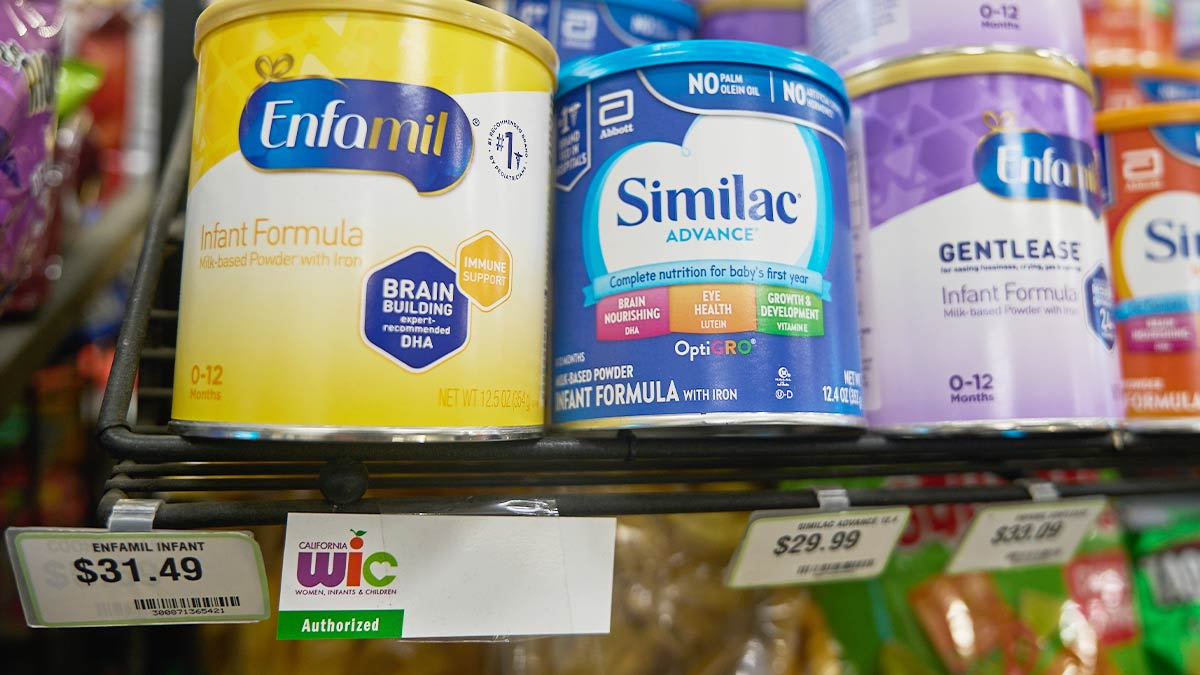
I sat in the WIC office waiting room for two hours and forty-seven minutes, holding a screaming Lily, a folder full of medical records, and a slowly dying phone battery, and I thought: this is what poverty feels like. Not the kind of poverty where you do not have money. The kind where you have to prove, over and over and over, that you deserve help. The kind where the system is designed to make you give up before you get what you need.
Let me back up. Lily was four months old. She had been diagnosed with cow's milk protein allergy at two months, after a rash that looked like someone had drawn a map of the Pacific Northwest on her torso and a week of projectile vomiting that made me consider buying stock in paper towels. Her pediatrician recommended a hypoallergenic formula. The cost: $38 per can. She went through a can every three days. That is $380 a month. On formula. For one baby. While I was working part-time at the nutrition clinic and Mark was finishing his apprenticeship and our rent in Portland was $2,400 a month for a two-bedroom apartment that had mold in the bathroom and a stove from 1987.
We applied for WIC. Women, Infants, and Children. A federal nutrition program that provides food assistance for pregnant women, new mothers, and children under five. I had referred dozens of families to WIC in my clinical work. I knew the program. I believed in the program. I just... had not anticipated being ON the program. There is a difference between knowing something exists and needing it to survive. The knowing is intellectual. The needing is visceral. It is humbling and terrifying and infuriating all at once.
The first appointment went fine. We qualified based on income. We got the standard WIC package: vouchers for milk, cheese, eggs, cereal, peanut butter, and formula. The formula vouchers covered standard iron-fortified formula. Which is great, except Lily could not drink standard formula. She was allergic to it. The standard formula made her vomit. The standard formula gave her the rash. The standard formula was literally poison to her body, and the WIC voucher was for the standard formula, and nobody at the first appointment had mentioned what to do about that.
I found out about the medical food authorization process from a mom in the waiting room. A mom who had been through it. A mom who told me, with the weary patience of someone who had fought this battle before, that I needed a prescription from Lily's pediatrician, a letter of medical necessity, documentation of failed trials on standard formula, and a completed medical request form that had to be submitted to the WIC state office for review. The review process, she said, could take 4-6 weeks. During which I would have to buy the hypoallergenic formula myself. At $380 a month. While waiting for approval.
I cried in the parking lot. Not dramatic crying. Quiet, exhausted, "I do not know how we are going to afford this" crying. Mark found me there when he came to pick us up, and he sat in the passenger seat with Lily in his lap and did not say anything for five minutes. Then he said: "We will figure it out. We always do." And we did. We cut our grocery budget to $80 a week. We stopped eating out entirely. We cancelled our streaming services. We sold some furniture on Facebook Marketplace. We made it work. But we should not have had to. The system should have worked faster. The system should have made it easier. The system should not require a parent to be a part-time paralegal just to get their baby the food they need.
The paperwork was its own special hell. The prescription from the pediatrician was easy enough—Dr. Chen wrote it without hesitation, bless her—but the letter of medical necessity required specific language that the WIC office provided in a template that was apparently from 2003 and formatted in a font I did not recognize. The documentation of failed trials meant I had to write a detailed feeding history: dates, amounts, symptoms, reactions, outcomes. I had to request Lily's medical records from the clinic, which took a week and cost $25 in copying fees. I had to fill out the medical request form in triplicate, which meant I had to write the same information three times by hand because the form was not available digitally.
And then I had to submit it. In person. To the WIC office. During business hours. Which meant taking time off work. Which meant losing income. Which meant we were even more broke than before. I submitted the packet on a Tuesday. The clerk told me it would be reviewed by the state nutritionist within 10 business days. I called on day 11. They had not received it. I called the WIC office. They had sent it. I called the state office again. They found it in a different department. It would be reviewed within 10 MORE business days.
Day 22: I called again. The nutritionist had reviewed it but needed additional documentation. Specifically, they needed proof that Lily had failed a trial on soy formula as well as standard formula. I had not known about the soy requirement. Nobody had told me. I called Dr. Chen. She wrote a new letter. I submitted it. Another 10 business days.
Day 33: Approved. I got the letter in the mail while I was at work, and I opened it in the break room at the clinic, and I cried. Again. The nutritionist who saw me crying asked if everything was okay, and I said, "WIC approved Lily's hypoallergenic formula," and she said, "Oh, that is wonderful!" and I said, "It took six weeks and I had to submit paperwork four times and I missed three days of work and I am still not sure how we paid rent last month, but yes, it is wonderful." She looked at me like I was having a breakdown. I probably was.
But here is the thing: once it was approved, it was LIFE-CHANGING. WIC covered 100% of Lily's hypoallergenic formula. Nine cans a month. $342 worth of formula. Every month. For a year. We went from spending $380 a month on formula to spending $0. We could breathe again. We could buy groceries without calculating the exact total before checkout. We could pay rent on time. We could sleep at night without worrying about money. The system was broken and inefficient and humiliating, but the outcome was transformative.
I started helping other parents navigate WIC after that. At the clinic, when I met families who were struggling with formula costs, I would ask if they had applied for WIC. If they had, I would ask about medical food authorization. If they had not heard of it, I would explain the process. I would share my timeline. I would tell them what documentation to request. I would give them Dr. Chen's office number. I would tell them to call every three days until someone answered. I would tell them to be persistent, to be polite but firm, to document every phone call, to keep copies of everything.
One mom, a single parent working two jobs, came back to see me after getting her son's hypoallergenic formula approved. She had used the Feeding Log to document everything. She had walked into the WIC office with a printed PDF, color-coded by symptom type, and the nutritionist had approved her request in two weeks instead of six. "You saved me," she said. I did not save her. The system did, eventually. But I helped her navigate the system, and that navigation is the difference between getting help and giving up.
Here is what I want every parent to know about WIC and formula: you are entitled to this. If your baby needs a specialty formula for medical reasons, WIC is legally required to provide it. The process is bureaucratic and frustrating and designed to make you quit, but you are entitled to the formula your baby needs. Do not let them tell you otherwise. Do not let them lose your paperwork. Do not let them delay your approval because they forgot to mention a requirement. Be persistent. Be organized. Be loud. Your baby's nutrition is not a favor. It is a right.
And if you are a healthcare provider reading this: help your patients. Write the prescription without making them ask three times. Provide the letter of medical necessity in the format WIC requires. Document the failed trials clearly. Call the WIC office on their behalf if you have time. The system is broken, but we can fix it one patient at a time.
Lily is two now. She does not need WIC anymore. But I still have the approval letter in a folder in my office. I pull it out sometimes when I am feeling overwhelmed by other bureaucratic nightmares—insurance appeals, school registrations, tax forms—and I remind myself: I survived WIC. I can survive this too. And so can you.
— Emily Hartwell, from Portland with a folder full of paperwork and a lot of feelings about the social safety net
